
Ano ang TESDA? Your Complete Guide to Understanding Philippine Skills Training
The Institution That’s Quietly Transforming Filipino Lives
Let me ask you something: What if I told you there’s a Philippine government agency that’s helped millions of people escape poverty, land international jobs, and build successful businesses—yet somehow remains relatively unknown to people outside the country?
Meet TESDA.
If you’re scratching your head wondering “Ano ang TESDA?” (What is TESDA?), you’re not alone. Even many Filipinos don’t fully understand this powerful institution until they need it. But here’s what I’ve learned after years of watching TESDA transform lives: This agency might be the Philippines’ best-kept secret for career advancement.
TESDA—the Technical Education and Skills Development Authority—is the government agency responsible for managing and supervising technical-vocational education in the Philippines. But that dry, bureaucratic description doesn’t capture what TESDA actually does.
TESDA is the bridge between unemployment and employment. Between unskilled and skilled. Between poverty and opportunity. Between “I don’t know what to do with my life” and “I have a certified skill that employers worldwide actually want.”
For international students particularly, understanding TESDA opens doors you might not even know existed. Want to work in Canada as a caregiver? TESDA. Interested in welding jobs in the Middle East? TESDA. Need practical IT skills without the four-year degree timeline? TESDA again.
Let me walk you through everything you need to know about this institution—its meaning, its importance, and how it could potentially change your life trajectory.
TESDA Courses for Abroad: The Ultimate Guide to In-Demand NC II & NC III Certifications
Ano ang TESDA? Breaking Down the Basics
The Official Definition
TESDA stands for Technical Education and Skills Development Authority (Kagawaran ng Edukasyong Teknikal at Pagpapaunlad ng Kasanayan in Filipino).
Established on August 25, 1994, through Republic Act 7796, TESDA replaced the previous Technical Education and Skills Development Authority and integrated the functions of:
- National Manpower and Youth Council (NMYC)
- Bureau of Technical and Vocational Education (BTVE)
- Apprenticeship Program of the Department of Labor and Employment
What This Actually Means in Real Life
Forget the government speak for a second. Here’s what TESDA actually does in plain English:
TESDA is your gateway to learning practical, hands-on skills that get you hired.
While universities teach you theory (important, but often disconnected from actual jobs), TESDA teaches you to do things:
- Weld metal that won’t fall apart
- Fix computers that actually work afterward
- Cook food that restaurants would serve
- Care for patients safely and compassionately
- Drive professionally
- Build furniture people want to buy
- Install electrical systems properly
The kahulugan ng TESDA (meaning of TESDA) extends beyond just education—it’s about employability. Every single program is designed with one question in mind: “Will this skill get someone a job?”
The Three Pillars of TESDA’s Mission
Understanding TESDA sa Pilipinas (TESDA in the Philippines) requires grasping its three core functions:
1. Setting Standards (Quality Assurance)
What This Means: TESDA establishes competency standards for various trades and occupations. They basically answer: “What does a competent welder/mechanic/caregiver need to know and do?”
Why It Matters: Without standards, a “certified electrician” from one school might be completely different from another. TESDA ensures consistency—when you hire someone with a TESDA NC II certification, you know exactly what they can do.
Real Impact: International employers trust TESDA certifications because they follow global competency frameworks. A Filipino welder with TESDA certification can work alongside Japanese, American, or European welders because they all follow similar standards.
2. Providing Training (Skills Development)
What This Means: TESDA operates training centers nationwide and accredits private institutions to deliver standardized training programs.
Why It Matters: Training isn’t just available in Manila—there are TESDA centers in nearly every province. Whether you’re in Bataan, Zambales, Olongapo, or remote Mindanao, skills training is accessible.
Real Impact: Over 2 million Filipinos receive TESDA training annually. That’s equivalent to training the entire population of Slovenia every single year.
The Ultimate Guide to TESDA Training Centers, Courses, and Contact Information Nationwide
3. Certification and Assessment
What This Means: TESDA doesn’t just train you—they also test and certify your competence through standardized assessments.
Why It Matters: Your TESDA certificate isn’t based on attendance or classroom grades. It’s based on demonstrating actual competence in real-world conditions. You either can perform the skill, or you can’t.
Real Impact: Employers worldwide recognize TESDA certificates because they represent proven competence, not just completed coursework.
Kahalagahan ng TESDA: Why TESDA Matters to the Philippines
Let’s talk about ang kahalagahan ng TESDA sa Pilipinas (the importance of TESDA in the Philippines). This isn’t just another government agency—it’s a critical national institution. Here’s why:
1. Addressing the Skills Gap
The Problem: The Philippines faces a paradox—high unemployment rates alongside companies complaining they can’t find skilled workers. Universities produce thousands of graduates annually, but many lack practical skills employers need.
TESDA’s Solution: By providing industry-aligned training, TESDA bridges this gap. They work directly with businesses to understand what skills are needed, then design programs to develop those exact skills.
The Numbers:
- 85-90% of TESDA graduates find employment within 6 months
- Compare this to the 35-40% of college graduates who remain underemployed
- TESDA training costs a fraction of college (often free with scholarships)
Real Story: I met Maria, a 24-year-old with a bachelor’s degree in psychology, unemployed for 18 months. She took a 6-month TESDA caregiving course. Three months later, she was deployed to Canada earning CAD 2,800 monthly. Her four-year degree couldn’t do what a six-month TESDA program accomplished.
The Ultimate Guide to TESDA Requirements: Enrollment, Certification, and Center Accreditation
2. Poverty Alleviation Through Skills
The Reality: Poverty in the Philippines isn’t always about lack of motivation—it’s often about lack of opportunity and marketable skills.
TESDA’s Impact:
| Before TESDA Training | After TESDA Certification |
|---|---|
| Unemployed or underemployed | Skilled employment |
| ₱5,000-₱10,000 monthly (if working) | ₱18,000-₱35,000+ monthly |
| Limited job options | Multiple employment opportunities |
| No international opportunities | Access to overseas employment |
| Dependent status | Financial independence |
The Multiplier Effect: When one family member gets TESDA training and finds good employment, it affects:
- Siblings can now afford education
- Parents can access better healthcare
- Family can improve housing
- Next generation breaks poverty cycle
Statistical Evidence: According to studies, households with at least one TESDA-certified member show 45% higher income levels compared to similar households without certified members.
3. Supporting OFW Deployment
The Connection: Over 10 million Filipinos work overseas, sending home approximately USD 36 billion annually in remittances. Many OFW positions require TESDA certification.
Critical Programs for OFWs:
- Caregiving NC II: Gateway to Canada, UK, Australia, New Zealand
- Welding certifications: Middle East construction, shipyards worldwide
- Electrical installation: International construction projects
- Plumbing: Global demand for certified plumbers
- Healthcare services: Hospitals and clinics worldwide
- Maritime trades: Ship crew certifications
Real Numbers: Approximately 60% of deployed OFWs hold TESDA certifications in their respective fields. TESDA programs literally enable billions of dollars in family support flowing back to the Philippines.
4. Empowering Filipino Youth
The Youth Unemployment Crisis: Youth unemployment (ages 15-24) in the Philippines typically runs 2-3x higher than general unemployment rates. Many young people graduate high school with no clear pathway forward.
TESDA’s Youth Programs:
Special Training for Employment Program (STEP):
- Targets out-of-school youth
- Free training in high-demand skills
- Job placement assistance
- Livelihood starter kits
Youth Entrepreneurship Programs:
- Business skills training
- Technical skills plus business management
- Mentorship from successful entrepreneurs
- Access to microfinance
Success Metrics: TESDA youth programs report:
- 75-80% employment rate within 6 months
- 25-30% start their own businesses
- 15-20% pursue further education (with TESDA credentials making them more competitive)
Personal Observation: I’ve watched 18-year-olds with no direction complete TESDA programs and become confident, employed professionals within a year. The transformation isn’t just economic—it’s psychological. They go from “I’m nobody” to “I’m a certified professional with marketable skills.”
5. Women’s Empowerment and Gender Equality
Breaking Stereotypes: TESDA has been instrumental in breaking down gender barriers in traditionally male-dominated fields.
The Numbers:
- 45-50% of TESDA enrollees are women
- Growing female participation in:
- Welding (traditionally 95% male)
- Automotive servicing (traditionally 90% male)
- Electrical installation (traditionally 85% male)
- Construction trades (traditionally 90% male)
Women-Focused Programs:
- Single mother scholarships
- Flexible schedules for parents
- Childcare support (some centers)
- Women in non-traditional fields initiatives
Economic Impact: Women with TESDA certifications show:
- 60-80% income increase compared to pre-training
- Greater household financial decision-making power
- Increased savings and investment capacity
- Better educational outcomes for their children
Real Example: Elena, 34, single mother, was earning ₱8,000 monthly as a domestic worker. After TESDA welding training (yes, welding), she now works in a Bataan factory earning ₱28,000 monthly. She says, “TESDA taught me that ‘women’s work’ is whatever work a woman chooses to do.”
The Complete Guide to TESDA Scholarships: How to Get Your Allowance and Train for Free
6. Supporting National Economic Development
Macro-Economic Impact:
Manufacturing Sector:
- Philippine manufacturing depends on TESDA-trained workers
- Electronics assembly, automotive parts, shipbuilding—all require certified technicians
- Foreign direct investment often depends on skilled workforce availability
Service Sector:
- Tourism and hospitality: TESDA culinary, housekeeping, front office programs
- BPO industry: TESDA IT and customer service training
- Healthcare: TESDA caregiving and health service programs
Construction Boom:
- Infrastructure projects (Build Build Build program)
- Requires: electricians, plumbers, welders, heavy equipment operators
- TESDA provides the skilled workforce
Export Services:
- Philippine labor export contributes significantly to GDP
- Quality of TESDA training affects national reputation
- Better-trained workers = higher salaries = more remittances
Statistical Context: The technical-vocational sector (largely TESDA-trained workers) contributes approximately ₱2.5 trillion to the Philippine economy annually—that’s about 12-13% of GDP.
TESDA Programs: What’s Actually Available?
Understanding TESDA programs helps you grasp the breadth of this institution. Let’s break down what’s offered:
TESDA Course Categories
1. Industrial Trades
- Welding (various specializations)
- Machining and metal fabrication
- Industrial electrical maintenance
- Mechatronics
- Instrumentation and control
2. Construction
- Carpentry
- Masonry and bricklaying
- Plumbing
- Tile setting
- Painting
- Electrical installation
- Heavy equipment operation
3. Automotive and Transport
- Automotive servicing
- Diesel engine repair
- Motorcycle/small engine repair
- Driving NC II (professional driving)
- Heavy vehicle operation
4. Information Technology
- Computer systems servicing
- Computer programming
- Animation
- Web development
- Network configuration
- ICT support
5. Healthcare Services
- Caregiving NC II
- First aid and CPR
- Massage therapy
- Dental aide
- Healthcare services NC II
6. Hospitality and Tourism
- Commercial cooking
- Bread and pastry production
- Food and beverage services
- Bartending
- Housekeeping
- Front office services
- Tour guiding
- Events management
7. Garment and Fashion
- Dressmaking
- Tailoring
- Fashion design
- Garment production
8. Beauty and Wellness
- Hairdressing
- Beauty care (facial and skin)
- Nail care services
- Spa therapy
- Barbering
9. Agricultural and Aquatic
- Organic agriculture
- Crop production
- Animal production
- Aquaculture
- Agricultural machinery operation
10. Electronics
- Consumer electronics servicing
- Electronic products assembly
- Telecommunications installation
- Avionics maintenance
Unlocking Your Career: A Guide to TESDA Jobs, UTPRAS, and the CTPR System
TESDA Competency Levels Explained
Understanding TESDA competencies is crucial:
| Level | Name | What It Means | Typical Duration |
|---|---|---|---|
| NC I | National Certificate I | Entry-level competency; performs routine tasks under supervision | 1-3 months |
| NC II | National Certificate II | Intermediate level; performs complex tasks with minimal supervision | 3-6 months |
| NC III | National Certificate III | Advanced level; supervisory capabilities and specialized expertise | 6-9 months |
| NC IV | National Certificate IV | Management level; planning, organizing, entrepreneurial readiness | 9-12 months |
Most Common: NC II is the sweet spot—the standard most employers require and the level most TESDA programs target.
Career Progression: Many people start with NC II, gain work experience, then return for NC III or IV while working. It’s a logical progression:
- NC II: Get employed
- Work 2-3 years: Build experience and income
- NC III: Advance to supervision
- Work 3-5 more years: Build expertise
- NC IV: Move to management or start your own business
TESDA Scholarship Programs: Study for Free
One of the most important aspects of ang kahalagahan ng TESDA is accessibility. Through various scholarship programs, TESDA ensures financial constraints don’t prevent skills development.
Major Scholarship Programs
1. Training for Work Scholarship Program (TWSP)
Coverage:
- Full tuition and training fees
- Training materials
- Assessment and certification fees
- Starter toolkits (some programs)
- Daily training allowance (some regions)
Eligibility:
- Filipino citizen
- At least 18 years old
- High school graduate or equivalent
- Willing to undergo training and assessment
- Priority: indigents, displaced workers, farmers, fisherfolk, solo parents, PWDs, senior citizens
Application Process:
- Visit nearest TESDA office
- Fill out TWSP application form
- Submit requirements (birth certificate, indigency certificate, valid ID)
- Attend orientation
- Sign scholarship agreement
- Enroll in chosen program
Annual Budget: TWSP provides approximately ₱3-5 billion annually, training hundreds of thousands of Filipinos for free.
2. Private Education Student Financial Assistance (PESFA)
For students in TESDA-accredited private institutions:
- Voucher program (₱5,000-₱15,000 typically)
- Covers tuition fees
- For priority courses
3. Special Training for Employment Program (STEP)
Targets disadvantaged sectors:
- Out-of-school youth (15-30 years)
- Persons with disabilities
- Indigenous peoples
- Displaced workers
- Solo parents
Special Features:
- Livelihood starter kits
- Post-training support
- Job placement assistance
4. Scholarship Programs for OFWs and Their Dependents
TESDA programs for OFWs:
- Training for returning OFWs
- Skills upgrading
- Entrepreneurship training
- Dependents can access priority scholarships
Why This Matters: Helps OFWs transition back to Philippine employment or start businesses using their overseas savings.
How Scholarships Change Lives
Real Numbers:
- Average TESDA training cost without scholarship: ₱8,000-₱25,000
- With scholarship: ₱0
- ROI: First month’s salary often exceeds what training would have cost
- Lifetime earnings increase: ₱2-5 million over career
The Multiplier Effect: Every scholarship isn’t just one person trained—it’s:
- One family lifted economically
- Siblings who can now afford education
- Next generation with better opportunities
- Community with one more skilled professional

TESDA Online Courses: Learning Anywhere, Anytime
The digital transformation of TESDA represents a massive expansion of access. TESDA online courses bring skills training to anyone with internet access.
What’s Available Online?
Free TESDA Online Programs:
Business and Entrepreneurship:
- Bookkeeping NC III
- Entrepreneurship Development
- Organic Agriculture Production
- Handicraft Making
- Financial Literacy
Technology:
- 2D Animation NC III
- Computer Programming
- Contact Center Services NC II
- Web Development
- Social Media Marketing and Management
Hospitality:
- Housekeeping NC II (theory)
- Front Office Services (theory)
- Events Management Services
- Food and Beverage Services (theory)
Personal Development:
- Communication Skills
- Basic Life Support
- Leadership and Management
- Customer Service Excellence
How TESDA Online Works
Step-by-Step Process:
1. Registration
- Visit TESDA website
- Create free account
- Verify email
- Complete profile
2. Course Selection
- Browse available courses
- Read descriptions and requirements
- Check duration and modules
- Enroll (completely free)
3. Self-Paced Learning
- Study modules sequentially
- Watch video tutorials
- Download resources
- Take practice exercises
- No strict deadlines
4. Assessments
- Complete module quizzes
- Final online exam
- Immediate results for some courses
5. Certification
- Certificate of completion for online component
- For NC certifications, must still attend physical assessment at TESDA center
Advantages of Online Learning
Accessibility:
- Study from anywhere
- No geographic limitations
- International students can access before arriving
- Rural areas with internet have equal access
Flexibility:
- Study any time (24/7 availability)
- Pause and resume at will
- Balance with work/family
- No commute time or costs
Cost Savings:
- Zero tuition fees
- No transportation expenses
- No accommodation costs
- Study from home
Preparation:
- Complete theory before physical training
- Enter practical training already knowledgeable
- Faster overall completion time
Limitations to Understand
Not All Skills Can Be Online:
- Welding requires actual welding practice
- Caregiving needs hands-on patient interaction
- Automotive work demands physical repairs
- Most technical trades need physical assessment
Self-Discipline Required:
- No structured schedule
- Easy to procrastinate
- No peer pressure to complete
- Requires strong self-motivation
Still Need Physical Assessment: For NC certifications, online study covers theory, but you must:
- Schedule practical assessment at TESDA center
- Demonstrate hands-on competence
- Pass physical skills test
- Receive official NC certificate
TESDA Certification Process: From Training to Employment
Understanding the TESDA certification process helps you plan your journey from enrollment to certification to employment.
The Complete Journey
Phase 1: Training (3-12 months typically)
What Happens:
- Attend classes (theory and practical)
- Hands-on skills practice
- Progressive skill development
- Instructor evaluation
- Maintain 85-90% attendance minimum
Your Responsibilities:
- Show up consistently
- Practice beyond required hours
- Ask questions when confused
- Help classmates (teaching reinforces learning)
- Document your progress
Phase 2: Competency Assessment
The Process:
Pre-Assessment:
- Complete required training hours
- Get instructor recommendation
- Submit assessment application
- Pay assessment fee (₱500-₱2,500)
- Schedule assessment date
Assessment Day:
Written Examination:
- Theory questions
- Safety protocols
- Industry standards
- Problem-solving scenarios
- Duration: 1-3 hours
- Passing: Usually 70-80%
Practical Demonstration:
- Actually perform the skills
- Real-world scenarios
- Industry-standard equipment
- Observed by certified assessor
- Evaluated against competency checklist
- Duration: 2-8 hours depending on skill
Interview/Oral Exam:
- Explain your work
- Discuss safety considerations
- Describe problem-solving approach
- Answer technical questions
- Duration: 15-45 minutes
Results:
- Competent: You passed! Certificate processing begins.
- Not Yet Competent: Specific feedback on gaps, can retake after additional training.
Phase 3: Certificate Issuance (4-8 weeks)
What You Receive:
National Certificate Contents:
- Your full legal name
- Date of birth
- Unique certificate number
- Qualification title
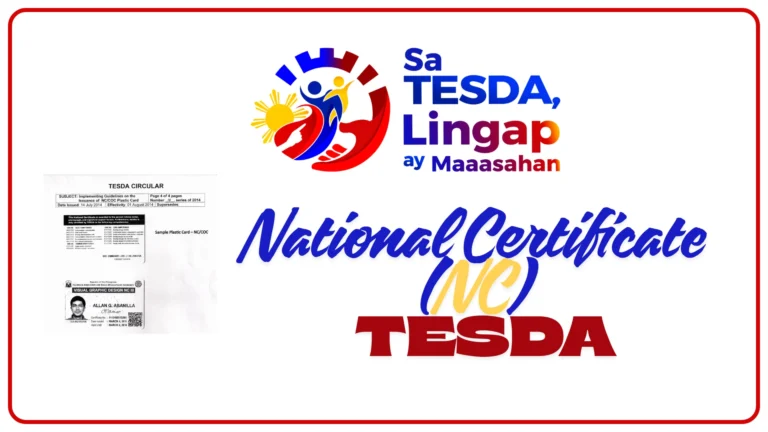
- Certification level (NC I, II, III, or IV)
- Issue date
- QR code for verification
- TESDA Director-General signature
- Security features
Certificate Validity:
- Most TESDA certificates don’t expire
- Some require renewal (first aid: 2 years, certain safety certs: 3-5 years)
- Check your specific qualification
Phase 4: Employment (0-6 months)
Immediate to 6 Months Post-Certification:
- Register with TESDA job placement
- Apply to employers
- Attend job fairs
- Network with alumni
- Start working!
Employment Success Rates:
- 70-85% find employment within 6 months
- Top programs (welding, caregiving, automotive): 85-95%
- Average starting salary: ₱18,000-₱30,000
- After 2-3 years: Often 50-100% salary increase
TESDA’s Impact on Philippine Society
Let’s zoom out and look at TESDA’s contribution to national development holistically.
Economic Impact
Direct Contributions:
- 2+ million trained annually
- Approximately ₱2.5 trillion economic contribution
- 12-13% of GDP from technical-vocational sector
- Reduced unemployment and underemployment
Indirect Benefits:
- Increased consumer spending from higher incomes
- Tax revenue from employed certified workers
- Reduced social welfare costs
- Entrepreneurship and business creation
Social Impact
Poverty Reduction:
- Skills training = employment = income = poverty escape
- Intergenerational poverty cycle breaking
- Improved living standards for families
- Access to better healthcare and education
Social Mobility:
- Background doesn’t determine future
- Accessible pathways to middle-class income
- Merit-based advancement
- Equal opportunity regardless of connections
Community Development:
- Skilled workers improve local infrastructure
- Entrepreneurs create local employment
- Reduced migration to overcrowded cities
- Stronger provincial economies
International Reputation
Philippine Workforce Quality:
- TESDA certifications recognized worldwide
- High demand for Filipino workers
- Premium salaries in international markets
- Positive national brand
Labor Export Success:
- 10+ million OFWs worldwide
- USD 36 billion+ annual remittances
- Many requiring TESDA certification
- Family support and national economic stability
Innovation and Adaptation
Industry 4.0 Response: TESDA continuously updates programs for:
- Digital skills integration
- Automation and robotics
- Green technology
- Artificial intelligence basics
- Future-ready workforce
Pandemic Response:
- Rapid shift to online learning
- Hybrid training models
- Safety protocols for physical training
- Continued service despite challenges
How International Students Can Access TESDA
If you’re an international student asking “Ano ang TESDA” because you’re considering Philippine training, here’s what you need to know:
Eligibility for International Students
Yes, foreigners can enroll in TESDA programs, with conditions:
Requirements:
- Valid passport
- Appropriate visa (student visa or relevant classification)
- Authenticated educational credentials
- Proof of Philippine residence
- Higher fees than Filipino citizens (typically 2-3x)
Best Programs for International Students:
High International Value:
- Caregiving NC II: Pathway to Canada, UK, Australia, New Zealand
- Welding certifications: Middle East, Singapore, global opportunities
- IT courses: Location-independent income potential
- Culinary programs: International hotel chains
- Maritime trades: Global shipping industry
Strategic Advantages:
Cost:
- TESDA training in Philippines: ₱8,000-₱25,000 (USD 140-450)
- Equivalent training in Western countries: USD 3,000-15,000+
- Massive cost savings
Quality:
- International standard competencies
- English instruction available
- Modern facilities in major centers
- Recognized certifications
Visa Pathways: Some TESDA certifications (particularly caregiving) can support immigration applications to countries like Canada, Australia, and New Zealand.
Practical Considerations:
Living Costs (Monthly):
- Accommodation: ₱3,000-₱8,000 (USD 53-140)
- Food: ₱6,000-₱12,000 (USD 105-210)
- Transportation: ₱2,000-₱4,000 (USD 35-70)
- Total: ₱11,000-₱24,000 (USD 193-421)
Compare this to training costs and living expenses in your home country—the Philippines offers incredible value.
TESDA vs. Traditional College: Making the Right Choice
One question I hear constantly: “Should I go to TESDA or college?”
Here’s my honest answer: It depends on your goals, circumstances, and career aspirations.
The Comparison
| Factor | TESDA | Traditional College |
|---|---|---|
| Duration | 3-12 months | 4-5 years |
| Cost | ₱0-₱25,000 (often free) | ₱40,000-₱200,000+ annually |
| Focus | Practical skills | Theory + broad education |
| Employment Timeline | 4-10 months to employment | 4+ years + job search |
| Starting Salary | ₱18,000-₱30,000 | ₱18,000-₱35,000 (many underemployed) |
| Career Ceiling | High (especially entrepreneurship) | Varies widely |
| International Recognition | High for technical skills | Depends on university |
| Debt | Minimal to none | Often significant |
| Skills | Job-ready immediately | Often requires additional training |
When TESDA Makes More Sense
Choose TESDA if:
- You need income quickly
- You prefer hands-on learning over theory
- You have financial constraints
- You want specific technical skills
- You’re eyeing international employment
- You want to start a skilled trade business
- You’re a practical learner
Success Stories:
- Welders earning ₱80,000+ monthly (overseas)
- Caregivers immigrating to Canada
- Automotive shop owners (₱100,000-₱300,000 monthly)
- IT entrepreneurs with location-independent income
When College Makes More Sense
Choose College if:
- You want professional careers (doctor, lawyer, engineer, architect)
- You excel academically and enjoy theoretical learning
- You can afford the time and money
- You want broad liberal arts education
- Corporate management is your goal
- You need a degree for specific career paths
Reality Check: Many successful people do both—TESDA first for immediate income, then college part-time while working. This strategy:
- Funds education through skilled work
- Combines practical skills with theoretical knowledge
- Reduces or eliminates student debt
- Builds work experience alongside education
The Future of TESDA: What’s Coming
Understanding TESDA’s roadmap and future plans helps you see where opportunities are heading.
Digital Transformation
Expanding Online Access:
- More courses going digital
- Hybrid models (theory online, practice in-person)
- Virtual reality training simulations
- Global accessibility
Digital Skills Focus:
- Cybersecurity training
- Cloud computing
- Data analytics
- AI and machine learning basics
- Digital marketing certification
Industry 4.0 Integration
Smart Manufacturing:
- Robotics operation and maintenance
- Automated systems training
- IoT (Internet of Things) applications
- Advanced manufacturing techniques
Green Technology:
- Solar panel installation and maintenance
- Wind energy technician training
- Green building certification
- Sustainable agriculture methods
- Electric vehicle maintenance
International Partnerships
Global Recognition Expansion:
- More mutual recognition agreements
- International competency alignment
- Cross-border certification validity
- Global skills passport initiatives
Foreign Collaborations:
- Technology transfer from developed countries
- Exchange programs for instructors
- Best practice sharing
- Equipment and facility upgrades
Inclusive Education Focus
Reaching Underserved Populations:
- Remote area mobile training units
- Programs for persons with disabilities
- Indigenous peoples’ training initiatives
- Senior citizen reskilling programs
- Gender equality in non-traditional fields
Frequently Asked Questions About TESDA
Ano ang TESDA at ano ang ginagawa nito?
TESDA (Technical Education and Skills Development Authority) is the Philippine government agency managing technical-vocational education and skills development. It sets standards, provides training, certifies competence, and connects graduates with employment.
Paano mag-enroll sa TESDA?
Enrollment process:
- Choose your course
- Visit nearest TESDA center or accredited school
- Submit requirements (birth certificate, IDs, educational credentials)
- Apply for scholarships if eligible
- Attend orientation
- Begin training
Libre ba ang TESDA?
Yes and no. Government TESDA centers charge minimal fees (₱200-₱500) to free with scholarships. Private accredited institutions charge ₱5,000-₱25,000. Scholarship programs (TWSP, PESFA, STEP) can cover costs completely for qualified applicants.
Gaano katagal ang TESDA course?
Duration varies:
- Short courses: 1-3 months
- NC II programs: 3-6 months
- NC III/IV: 6-12 months
- Part-time: Double full-time duration
May expiry ba ang TESDA certificate?
Most don’t expire. Your NC II or III certification is valid indefinitely. Exceptions: First aid (2 years), some safety certifications (3-5 years). Always check your specific qualification.
Pwede bang mag-abroad with TESDA certificate?
Absolutely! Many TESDA certifications are specifically designed for international recognition. Popular for overseas work: caregiving, welding, electrical, plumbing, maritime trades, IT.
Ano ang NC II sa TESDA?
NC II (National Certificate II) is intermediate-level competency certification. It means you can perform complex tasks with minimal supervision—the standard most employers require.
May age limit ba ang TESDA?
Minimum: Usually 18 years (some programs accept 17 with parental consent) Maximum: None for most programs
I’ve seen successful TESDA students ranging from 17 to 65 years old.
Pwede bang magtrabaho habang nag-TESDA?
Depends on program schedule:
- Full-time programs (8 AM-5 PM): Difficult to work simultaneously
- Part-time/evening programs: Designed for working students
- Online components: Study anytime
Many students work weekends or part-time while training.
Mas mataas ba ang sahod ng TESDA graduate?
Statistics show yes:
- TESDA graduates: ₱18,000-₱35,000+ starting
- Non-certified workers: ₱10,000-₱18,000
- After 2-3 years experience: 50-100% salary increase common
- Overseas deployment: USD 1,500-5,000+ monthly
Real Success Stories: TESDA Changed Their Lives
Let me share some actual stories that illustrate ang kahalagahan ng TESDA sa pag-unlad ng Pilipinas (TESDA’s importance in Philippine development).
From Street Vendor to International Welder: Juan’s Journey
Background: Juan, 26, sold street food in Manila earning ₱200-₱400 daily (₱6,000-₱12,000 monthly). No high school diploma. No prospects.
TESDA Path:
- Year 1: Completed ALS (Alternative Learning System) for high school equivalency
- Year 1-2: Enrolled in Welding NC II through TWSP scholarship
- Month 7: Passed NC II certification
- Year 2: Worked as helper in Bataan welding shop (₱18,000/month)
- Year 3: Promoted to junior welder (₱26,000/month)
- Year 4: Deployed to Saudi Arabia (USD 2,800/month = ₱156,800)
- Current (Year 7): Senior welder in Dubai (USD 4,200/month = ₱235,200)
Impact:
- Built family home in province (₱1.2 million)
- All siblings now in college
- Started small welding business in Philippines (managed by brother)
- Planning to return and expand business
Juan’s Words: “Akala ko tapos na ang buhay ko sa kalye. TESDA showed me na may pag-asa pa. Ngayon, yung mga dating mga customer ko sa street food, ako na ang nag-hire sa kanila sa business ko.” (I thought my life was stuck on the streets. TESDA showed me there’s still hope. Now, my former street food customers work for me in my business.)
Single Mother to Canadian Permanent Resident: Rosa’s Story
Background: Rosa, 32, separated with three children, working as domestic helper earning ₱9,000 monthly. Living with parents. Struggling.
TESDA Path:
- Year 1, Months 1-6: Caregiving NC II (TWSP scholarship, mother watched kids)
- Year 1, Month 7: Certified
- Year 1-2: Worked at Manila hospital (₱20,000/month)
- Year 3: Applied to Canada caregiver program
- Year 4: Deployed to Toronto family (CAD 2,600/month)
- Year 5: Upgraded to PSW (Personal Support Worker) while working
- Year 6: Permanent residency approved
- Current (Year 8): LPN (Licensed Practical Nurse), brought all three children to Canada
Impact:
- Children now in Canadian schools
- Youngest child born in Canada (Canadian citizen)
- Purchased condo in Toronto
- Plans to sponsor parents soon
Rosa’s Reflection: “TESDA ang naging passport ko. Hindi lang sa Canada, kundi sa panibagong buhay para sa aming pamilya. Kung hindi dahil sa scholarship program na yon, nandito pa rin ako sa Pilipinas, struggling.” (TESDA became my passport. Not just to Canada, but to a new life for my family. Without that scholarship program, I’d still be in the Philippines, struggling.)
Career Changer at 42: Robert’s Tech Transformation
Background: Robert, 42, worked in call center for 15 years. Burned out. Dead-end. No degree.
TESDA Path:
- Year 1, Months 1-4: Computer Systems Servicing NC II
- Month 5: Certified
- Months 6-12: Worked at computer shop (₱16,000/month)
- Year 2: Started freelance computer repair on weekends
- Year 3: Opened small computer shop (₱35,000/month revenue)
- Year 4: Added internet cafe component (₱55,000/month)
- Current (Year 6): Two locations, also teaches TESDA computer courses part-time (₱90,000-₱140,000 monthly combined income)
Impact:
- Financial independence
- Flexible schedule with family
- Respected in community
- Helping next generation through teaching
Robert’s Insight: “Sa edad ko, akala ko imposible na mag-career shift. TESDA proved na skills, hindi edad, ang importante. At 42, I started over. At 48, I’m more successful than I ever imagined.” (At my age, I thought career change was impossible. TESDA proved that skills, not age, matter. At 42, I started over. At 48, I’m more successful than I ever imagined.)
Out-of-School Youth to Entrepreneur: Michelle’s Culinary Success
Background: Michelle, 19, dropped out of high school due to family financial problems. Worked as waitress earning ₱10,000 monthly.
TESDA Path:
- Completed ALS while working
- Year 1: Bread and Pastry Production NC II (STEP scholarship)
- Year 1: Commercial Cooking NC II (back-to-back)
- Year 2: Worked at hotel in Subic (₱18,000/month)
- Year 3: Started weekend catering side business
- Year 4: Quit hotel job, full-time catering and bakery
- Current (Year 6): Owns popular bakery-cafe with 8 employees (₱120,000-₱180,000 monthly profit)
Impact:
- Employs family members
- Supports younger siblings’ education
- Community employer
- Plans to franchise
Michelle’s Advice: “Hindi hadlang ang kahirapan o ang hindi pagtapos ng high school. Ang importante, may pangarap ka at willing kang magtrabaho. TESDA gave me the skills. Hard work gave me the success.” (Poverty or not finishing high school isn’t a barrier. What matters is having dreams and willingness to work. TESDA gave me the skills. Hard work gave me the success.)

How to Make the Most of TESDA: Insider Strategies
Now that you understand ano ang TESDA, let me share practical strategies for maximizing your TESDA experience.
Before You Enroll
1. Research Thoroughly
Don’t just pick a course because it sounds interesting. Consider:
- Industry demand: Which skills have actual job openings?
- Salary potential: What’s the realistic income trajectory?
- Personal aptitude: Do you have natural inclination or interest?
- Physical requirements: Can you handle the demands?
- Career pathway: Where does this skill lead long-term?
Pro Tip: Visit job posting sites (JobStreet, Indeed Philippines) and search for positions requiring TESDA certifications. See what’s actually hiring.
2. Visit Training Centers
Don’t enroll sight unseen:
- Tour facilities
- Check equipment condition
- Observe classes in session
- Talk to current students
- Meet instructors if possible
- Assess cleanliness and safety
Red Flag Signs:
- Outdated, broken equipment
- Unmotivated students
- Dirty, unsafe facilities
- Instructors who seem disengaged
- Aggressive sales tactics
3. Plan Finances Completely
Even with scholarships, budget for:
- Living expenses: 6 months minimum
- Emergency fund: ₱10,000-₱20,000
- Transportation: Daily costs add up
- Materials: Not always covered
- Assessment fees: ₱500-₱2,500
- Job search period: 1-3 months post-certification
4. Arrange Support Systems
Training is demanding. Line up:
- Family support (childcare if needed)
- Financial backup (savings or family help)
- Transportation arrangements
- Study partners or accountability buddies
During Training
5. Attend Everything
This cannot be overstated:
- 85-90% attendance is minimum for certification eligibility
- Missing even a few days can disqualify you
- No attendance = no assessment = no certificate = wasted time
6. Practice Beyond Requirements
The difference between mediocre and excellent students:
- Stay late for extra practice
- Come early for additional work
- Practice on weekends (with permission)
- Ask to borrow equipment for home practice (if allowed)
I’ve never met a TESDA graduate who said, “I practiced too much.”
7. Build Your Network Aggressively
Your classmates are gold:
- Future business partners
- Job referral sources
- Lifelong friends
- Support system
Create WhatsApp/Viber groups. Exchange numbers. Stay connected. Some of my best career breaks came from TESDA classmate connections made 5-10 years earlier.
8. Document Your Journey
Create a portfolio:
- Photos of your work (with permission)
- Videos of processes
- Before/after examples
- Practice pieces
- Certificates of participation
Why: Employers love seeing actual work samples. Your portfolio differentiates you from other applicants with identical certifications.
9. Learn Beyond the Curriculum
TESDA teaches core competencies, but superstars go further:
- Read industry magazines
- Watch YouTube tutorials
- Follow professionals on social media
- Ask instructors for supplementary resources
- Learn adjacent skills
Example: If you’re in automotive servicing, also learn customer service excellence, basic business accounting, and inventory management. These adjacent skills multiply your value.
10. Master the Assessment Standards Early
Day One of training:
- Get the competency assessment checklist
- Understand exactly what you’ll be tested on
- Practice specifically for those standards
- Don’t waste time on impressive but non-assessed skills
After Certification
11. Start Job Hunting Before Graduation
Timeline:
- 6-8 weeks before completion: Start applying
- 4 weeks before: Attend job fairs
- 2 weeks before: Follow up on applications
- Graduation week: Ideally have interviews scheduled
12. Leverage TESDA Job Placement Services
Free resources:
- Job vacancy listings
- Employer connections
- Resume writing assistance
- Interview preparation
- Direct referrals
Don’t be shy—use these services. That’s what they’re for.
13. Consider Stacking Certifications
Strategic combinations:
- Welding + Electrical = construction versatility
- Caregiving + First Aid = healthcare premium
- Computer Hardware + Programming = tech entrepreneurship
- Culinary + Baking + Bartending = food business
- Automotive + Driving NC II = transport industries
Timeline: With planning, complete 2-3 certifications in 12-18 months.
14. Never Stop Learning
The best TESDA graduates:
- Attend workshops and seminars
- Take refresher courses
- Pursue higher NC levels (NC II → NC III → NC IV)
- Add international certifications
- Stay current with industry trends
Technology evolves. Techniques improve. Stay ahead.
TESDA’s Role in Post-Pandemic Recovery
The COVID-19 pandemic devastated employment. Understanding TESDA and employment opportunities in the recovery context is crucial.
Pandemic Impact and Response
The Challenges:
- Training centers closed temporarily
- Assessment suspended
- Students stranded mid-program
- Employment opportunities disappeared
TESDA’s Adaptation:
1. Rapid Online Pivot
- Expanded online course offerings
- Hybrid training models developed
- Virtual assessment pilots
- Digital learning infrastructure investment
2. Safety Protocols
- Physical distancing in workshops
- Enhanced sanitation procedures
- Reduced class sizes
- Staggered schedules
- Health screening requirements
3. Emergency Employment Programs
- Rapid skills training for displaced workers
- Healthcare worker upskilling
- Digital economy preparation programs
- Green economy transition training
Post-Pandemic Growth Sectors
Where TESDA is focusing resources:
Healthcare Expansion:
- Caregiving demand skyrocketed
- Healthcare services training expanded
- First aid and emergency response
- Mental health support skills
Digital Economy:
- E-commerce management
- Digital marketing
- Content creation
- Virtual assistance
- Online business management
Logistics and Delivery:
- Warehouse operations
- Inventory management
- Last-mile delivery systems
- Cold chain management
Manufacturing Recovery:
- Personal protective equipment production
- Medical device manufacturing
- Pharmaceutical support roles
- Food processing and safety
Green Recovery:
- Renewable energy installation
- Sustainable agriculture
- Green building certification
- Waste management systems
TESDA for Different Life Stages
Ang kahalagahan ng TESDA varies depending on where you are in life. Let’s break it down:
For Fresh High School Graduates (17-22 years)
Your Situation:
- Just finished K-12
- Unsure about college
- Need to contribute to family income
- Want quick employment pathway
TESDA Advantages:
- Fast track to employment: 6-12 months vs. 4 years
- Minimal to zero debt: Unlike college loans
- Earn while learning: Part-time work possible
- Career exploration: Try different fields affordably
- College bridge: Can pursue degree later while working
Strategic Approach:
- Take 1-2 TESDA programs (6-12 months)
- Work and earn (1-3 years)
- Decide: Continue in skilled trade or pursue degree part-time
- Either path, you have income and skills
Real Advantage: Your college-bound friends will graduate in debt and jobless at 22. You’ll be 22 with 3 years work experience, savings, and clear career direction.
For Young Professionals (23-30 years)
Your Situation:
- Have some work experience
- Stuck in low-paying jobs
- Want career change
- Need better income
TESDA Advantages:
- Career pivot: Switch industries without 4-year commitment
- Income boost: Certified skills command higher wages
- Entrepreneurship: Start your own business with technical skills
- International deployment: Many programs lead to overseas work
Strategic Approach:
- Keep current job
- Enroll in evening/weekend TESDA program
- Complete certification while working
- Transition gradually or make clean break
- Significantly higher earning potential
Success Pattern: I’ve seen countless 25-30 year-olds double their income within 18 months of TESDA certification.
For Parents and Breadwinners (30-45 years)
Your Situation:
- Family responsibilities
- Can’t afford long training
- Need immediate income improvement
- Limited time and resources
TESDA Advantages:
- Short duration: 3-6 months typical
- Scholarship priority: Solo parents often get preference
- Flexible schedules: Part-time options available
- Family-friendly: Some programs accommodate parents
Strategic Approach:
- Choose high-demand, quick-certification programs
- Apply for every scholarship possible
- Arrange family support for training period
- Target certifications with immediate employment
- Focus on income maximization
Special Programs:
- TESDA solo parent scholarships
- Flexible scheduling
- Childcare support (some centers)
- Priority job placement
For Career Changers (35-55 years)
Your Situation:
- Burned out in current career
- Want meaningful work
- Have life experience
- Ready for new direction
TESDA Advantages:
- Age-friendly: No discrimination in skilled trades
- Experience valued: Life skills enhance technical skills
- Second act: Many successful mid-life career changes
- Entrepreneurship: Technical skills + business experience = success
Strategic Approach:
- Choose fields valuing maturity (electrical, plumbing, specialized trades)
- Leverage existing skills (management + technical = supervisor roles)
- Consider teaching (TESDA instructors earn well and have impact)
- Plan business (technical skills + experience = viable enterprise)
Real Talk: I’ve met 45-year-olds who became more successful after TESDA than they were in decades of corporate work.
For Seniors and Retirees (55+ years)
Your Situation:
- Retirement income insufficient
- Want to stay active
- Decades of experience
- Need supplementary income
TESDA Advantages:
- No age limits: Most programs welcome seniors
- Senior scholarships: Special programs for 60+
- Flexible pacing: Accommodations often available
- Purpose and income: Both benefits
Strategic Approach:
- Choose less physically demanding trades (computer servicing, bookkeeping, teaching)
- Leverage lifetime experience (mentorship, consulting)
- Part-time work or small business
- Stay mentally and physically active
Example: I met a 62-year-old retired accountant who took TESDA bookkeeping and small business management. She now runs a microfinance consulting business helping sari-sari store owners. Income: ₱30,000-₱50,000 monthly, working 15-20 hours weekly.
TESDA’s Contribution to Sustainable Development Goals
Understanding TESDA’s alignment with sustainable development goals shows its global relevance.
SDG 1: No Poverty
How TESDA Helps:
- Skills training = employment = income = poverty reduction
- Free training through scholarships
- Livelihood programs
- Entrepreneurship support
Impact: Families with TESDA-certified members show 45% higher income levels.
SDG 4: Quality Education
How TESDA Helps:
- Accessible technical-vocational education
- Recognized certifications
- Lifelong learning opportunities
- Alternative pathways to education
Impact: Over 2 million trained annually across all socioeconomic levels.
SDG 5: Gender Equality
How TESDA Helps:
- 45-50% female enrollment
- Women in non-traditional fields programs
- Single mother scholarships
- Equal pay for certified skills
Impact: Women’s economic empowerment through marketable skills.
SDG 8: Decent Work and Economic Growth
How TESDA Helps:
- Industry-aligned skills training
- Job placement services
- Competency-based standards
- Youth employment programs
Impact: 70-85% employment rate within 6 months of certification.
SDG 9: Industry, Innovation, and Infrastructure
How TESDA Helps:
- Skilled workforce for industrial development
- Innovation and technology integration
- Industry partnerships
- Infrastructure development support
Impact: Approximately ₱2.5 trillion economic contribution annually.
SDG 10: Reduced Inequalities
How TESDA Helps:
- Accessible to all socioeconomic levels
- Geographic coverage (all provinces)
- Programs for marginalized sectors
- Merit-based advancement
Impact: Social mobility through skills regardless of background.
Your Action Plan: Getting Started with TESDA
You’ve learned ano ang TESDA and ang kahalagahan nito. Now, here’s your concrete action plan:
This Week (Days 1-7)
Day 1: Self-Assessment
- What skills interest you genuinely?
- What’s your financial situation?
- How much time can you commit?
- What’s your ultimate career goal?
Day 2: Market Research
- Check job postings for skills in demand
- Research salary ranges
- Identify growth industries
- Consider international opportunities
Day 3: TESDA Research
- Visit TESDA official website (tesda.gov.ph)
- Browse available courses
- Check training centers near you
- Review scholarship programs
Day 4: Information Gathering
- Contact nearest TESDA office
- Ask about specific programs
- Inquire about schedules
- Get enrollment requirements list
Day 5: Financial Planning
- Calculate total costs (training + living)
- Identify funding sources
- Research scholarship eligibility
- Create backup plans
Day 6-7: Family Discussion
- Share your plans
- Discuss responsibilities
- Get support commitments
- Address concerns
Next Two Weeks (Week 2-3)
Document Preparation:
- Request PSA birth certificate
- Get medical certificate (if needed)
- Take ID photos
- Gather educational credentials
- Make photocopies (multiple sets)
Site Visits:
- Visit training centers in person
- Tour facilities
- Observe classes
- Talk to current students
- Meet instructors
Application Preparation:
- Complete application forms
- Prepare scholarship documents
- Organize all requirements
- Create checklist
Month One
Application Submission:
- Submit enrollment application
- Apply for all relevant scholarships
- Pay any required fees
- Get receipts
Preparation Phase:
- Arrange accommodation (if needed)
- Plan transportation
- Buy necessary supplies
- Set up support systems
Pre-Training:
- Attend orientation
- Meet classmates
- Finalize schedule
- Mental preparation
During Training (Months 2-7)
Excellence Mode:
- Perfect attendance
- Extra practice hours
- Build strong network
- Document progress
- Learn beyond curriculum
Ongoing:
- Start job search (last 2 months)
- Build portfolio
- Connect with alumni
- Prepare for assessment
Post-Certification (Months 8-12)
Employment Focus:
- Active job hunting
- Leverage TESDA placement
- Network extensively
- Consider entrepreneurship
Continuous Improvement:
- Plan next certification
- Attend workshops
- Build reputation
- Stay current
Final Thoughts: TESDA as National Treasure
After thousands of words explaining ano ang TESDA and ang kahalagahan nito sa Pilipinas, let me give you the bottom line:
TESDA isn’t perfect. Some centers have outdated equipment. Some instructors are better than others. Bureaucracy can be frustrating. Facilities vary in quality.
But here’s what TESDA gets absolutely right: It provides genuine opportunity regardless of your background.
Your family’s wealth doesn’t matter. Your connections don’t matter. Your past doesn’t matter. What matters is: Can you show up? Can you learn? Can you demonstrate competence?
If yes, TESDA will certify you, and employers will hire you.
For the Philippines as a nation, TESDA represents something profound: The democratization of economic opportunity.
In a country where your last name often determines your future, where the right connections matter more than ability, where poverty can trap generations—TESDA offers a different path.
It says: Learn this skill. Pass this assessment. Get this certificate. Find employment. Earn decent income. Build better life.
No guarantees. No shortcuts. Just honest exchange: your effort for recognized competence.
For international students, TESDA offers exceptional value: world-class training at developing-world prices, with certifications recognized globally, in a country where English is widely spoken and living costs are affordable.
The Statistics Speak:
- 2+ million trained annually
- 70-85% employment rate
- 45% income increase for certified workers
- ₱2.5 trillion economic contribution
- Millions of families lifted from poverty
But beyond statistics are real people: Juan the welder in Dubai. Rosa the nurse in Canada. Robert the entrepreneur. Michelle the bakery owner. Millions more with similar stories.
TESDA didn’t give them handouts. It gave them something better: Skills. Certification. Opportunity.
What they did with that opportunity was up to them.
And now, what you do with this information is up to you.
You know what TESDA is. You understand its importance. You’ve seen the opportunities. You have the roadmap.
The only question remaining: Will you take action?
Take Your First Step Today
Don’t wait for perfect timing. It doesn’t exist.
Don’t wait until you have more money. Scholarships are available.
Don’t wait until you’re “ready.” Nobody feels ready—they just start.
Here’s what to do right now:
- Visit tesda.gov.ph
- Browse available courses
- Find nearest training center
- Contact them this week
- Start the enrollment process
Six months from now, you’ll either be:
- Certified and employed with new skills, OR
- Still thinking about it
Your choice. Your future. Your move.
Make it count.
Salamat (Thank you) for reading this comprehensive guide. If TESDA changes your life the way it’s changed millions of others, pay it forward. Help someone else discover these opportunities.
Mabuhay ang TESDA. Mabuhay ang Pilipinas.

Hello po!
Ano po’ng TESDA address ang may offer ng aluminum window installation?